interaction system
Theme
Time-lapse photography and slow-motion video show the speed and slowness of time, allowing viewers to explore details that are difficult to capture with our eyes through visual technology. Use the impact of time difference to guide the audience to think about the relationship between time and movement, and feel how technology allows us to see the "invisible" world.
Target audience
Families over 8 years old, school groups and a general audience curious about technology and vision.
the key points to pay attention to
1. User engagement and interactivity
Intuitive interactive experience: Users can quickly understand how to use buttons and turntables. The design should be simple and easy to operate to avoid confusion or frustration during the user experience.
Feedback and response: Create instant feedback for interactions, such as tactile, visual, or sound feedback, so that the user feels that each action leads to a clear result, enhancing the immersion of the experience.
Multi-layered interaction: Multiple levels of interaction for different types of users, such as first-time users, can simply adjust the playback speed, while skilled users can control more details and explore the combination of slow motion and time-lapse photography.
2. Visual and content presentation
Visual design appeal Our target audience is over 8 years old; especially when designing for young and modern audiences, high-saturation colors can be used to attract attention. The overall color style of the device should also be unified with the environment so that it will not be obtrusive.
Content modularization: Consider dividing the content into different modules, such as "slow motion footage" and "time-lapse photography footage," so that the audience can choose the content of their interest and enhance the flexibility of the interactive experience.
3. Guidance and explanation
Guide interface and instructions: Set up a concise and clear guide page to provide short instructions when the user enters the main interface or interactive session to help them quickly get started.
Visual prompts: Add visual action prompts or highlighted feedback in the user interface, such as button flashes or arrow guides, to help users quickly find interaction areas.
4. Be inclusive
Accessibility design: Ensure that the interface is as user-friendly as possible for all users, including those who are visually or hearing-impaired. For example, use high-contrast color designs and provide text descriptions and sound cues for easy access by all.
lucia also made further adjustments in the cooperation.

Experience goal
1. Interactively perceive the different ways time flows (fast and slow).
2. Understand the relationship between shooting frame rate and playback speed.
3. Inspire interest in scientific exploration through immersive interactive experiences.
In conjunction with other students' research on interactive museums, I also conducted a survey on artists of the time.


Nobuhiro Nakanishi, Layer Drawing - the Tactual Sky, 2019, Yumiko Chiba Associates at Dallas Art Fair 2019, Yumiko Chiba Associates.
In his evocative, mixed-media sculptures and installations, Nobuhiro Nakanishi aims to bridge the gap between art and life through immersive, time-based images of nature and natural phenomena that come as close as possible to matching how we might perceive them in reality. “By capturing spatial change and the infinite flow of time, I strive to produce art that creates movement between the artwork itself and the viewer’s experience of the artwork,” he says. With his series of what he calls “layered drawings,” for example, he begins by photographing such things as sunsets, foggy forests, or a burning candle over a period of time. Nakanishi then mounts his photographs onto clear acrylic panels, out of which he forms chronological, layered installations that effectively re-create these phenomena for viewers to experience, while highlighting the process of perception itself.
I think each of us is subject to the passage of time, but each of us feels and perceives it in our own way. He installed a series of photos of natural scenery such as sunsets, misty forests, burning candles, etc. on transparent acrylic panels to form a layered installation arranged in chronological order, giving a sense of time overlapping shadows.I really like this kind of layered painting, and the wonderful overlapping effect through the transparency of the picture makes me feel interesting.

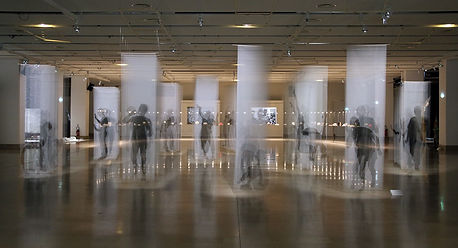
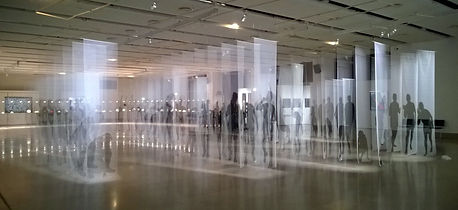
Pia Männikkö, Déjà Vu VII, the 15th edition of Miniartextil -exhibition in Le Beffroi, Montrouge, Paris, 2019.
In her series, artist Pia Mannikko observes and recreates the physical pathways of the human form, depicting small intervals of movement in space (records of a series of movements in a brief moment).
Using gauzy fabrics and ink (hand-painted ink silhouettes), he presents a series of ghostly silhouettes through different rooms, as if each flowing panel were a moment frozen in time. Overall, each site-specific installation shows the trail of A person moving from point A to point B.
Usually, no matter where we go, we don't leave a physical footprint, so it's difficult to know the exact area where our bodies reside, but Mnnikk's creation gives us a better understanding of the human body's movement and physical spatial capabilities. They allow us to unconsciously think about how often we retrace our steps.
"For this installation, I took pictures of four artists. My life-size silhouettes hang from the ceiling in order of four. People can walk around, walk through these scenes, and view the installation from different angles. Air ventilation causes the lightweight fabric to move, which emphasizes the sense of movement in the image."
In my opinion,In order to look more athletic, this project uses tulle fabric and ink to show the contours of people at different moments when they are moving, which gives me inspiration. We can capture every frame in the video and connect it to form a picture through the device, which can also make people better understand the frame rate and guide the audience to think about the relationship between time and movement. And see how technology allows us to see the "invisible" world.

brilliant photo by Nom Pourflickr (He’d prefer to remain nameless).
Time is an illusion. Time only exists when we are thinking about the past and the future. Time does not exist here and now."
The polaroid time in the polaroid is interesting, and it also informs our subsequent choice to process the video into each frame.
Eadweard Muybridge: The Curious Forefather of Cinema


Animal Locomotion: Plate 617 (Nude Man Riding Horse), 1887

Animal Locomotion: Plate 156 (Woman Leaping Over Stool), 1887
Animal Locomotion: Plate 765 (Crow in Flight), 1887
Inspired by the above research, I decided to find some daily time-lapse videos to explore.
mindmap of time-lapse

Fast-natural phenomena


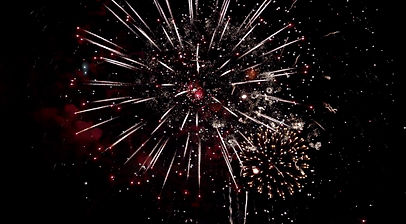
Fast-natural phenomena


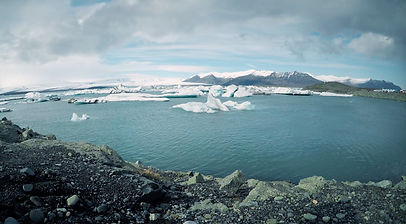


Work in PR


UX user flow

Nic completes the diagram even more.
Throughout the project, I actively participated, contributed my own ideas, and helped others when they were in trouble. At first, I was not completely clear about the project requirements due to some unfamiliar terminology, but fortunately Karen's kindness helped me overcome many problems.